
Quantizing in the Loop: Drift-Aware Ultra-Low-Bit Vision-Language-Action Models
Paper available
arXiv: 2611.30178
Authors & affiliations (7)
Author order: Original order
- First published
- 2026-11-24
- Latest paper revision
- v1
- Venue
- arXiv
Nanyang Technological University researchers applied LoopQ to Physical Intelligence’s openpi π₀.₅ LIBERO policy. They quantized 414 linear layers across the backbone and action expert, using closed-loop calibration and readout-aligned fine-tuning. The authors report 97.6% success on LIBERO and 74.9% on LIBERO-Plus for the 2-bit policy.
View full model descriptionLoad model.safetensors with openpi’s pi05_libero configuration and the included normalization statistics. The 9,058,009,496-byte PyTorch file stores 2-bit-quantized values decoded to BF16. Its tensor header lists both BF16 and F32 tensors.
Paper available
Author order: Original order
Training code for this version is unconfirmed. Public code resources do not establish access to the exact training implementation. View verification notes
| File | Access | Weights license | Commercial use |
|---|---|---|---|
| π₀.₅ LoopQ LIBERO 2-bit | Access | Weights license | Commercial use |
SourceVerified on · 2026-11-24
The paper’s compact 1.58 GB configuration uses trellis-coded weights. With 8-bit activations and custom integer kernels, the paper reports 3.72 GB inference memory on Jetson AGX Thor. Its RTX 6000 Ada experiment reports 74.6 ms per action chunk and 58 successes out of 75 across three AgileX Piper tasks. In the paper’s RTX 6000 Ada test with floating-point activations and weights decoded at load, the same packed 2-bit configuration uses 6.16 GB of GPU memory and takes 82.1 ms per action chunk. The paper separately reports 80.0% on LIBERO and 49.8% on LIBERO-Plus for its 1-bit experiment. This download contains the 2-bit policy. Available weights or code do not establish plug-and-play robot compatibility. Check the required configuration, data and interfaces in the source documentation.
Third party
Third-party fine-tune
Actions
Robotic arm
Supervised fine-tuning
Derived from: π₀ · π₀.₅ ↗
Family and other-version demonstrations are context, not independently verified results for the selected weights.
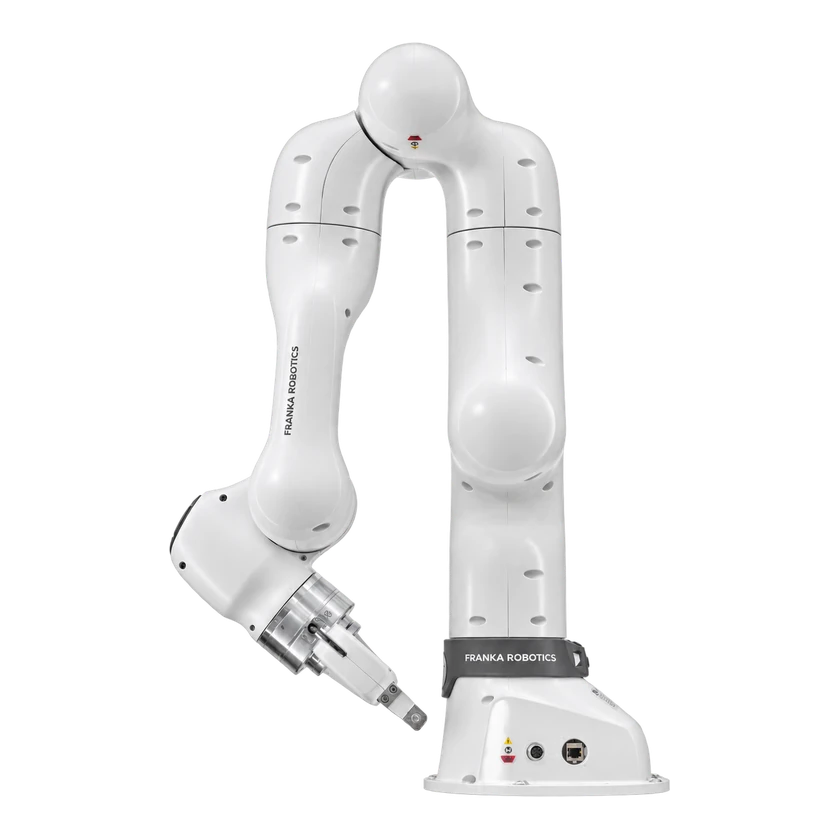
Robot Arms
The authors report a separate real-robot evaluation on Franka Research 3.
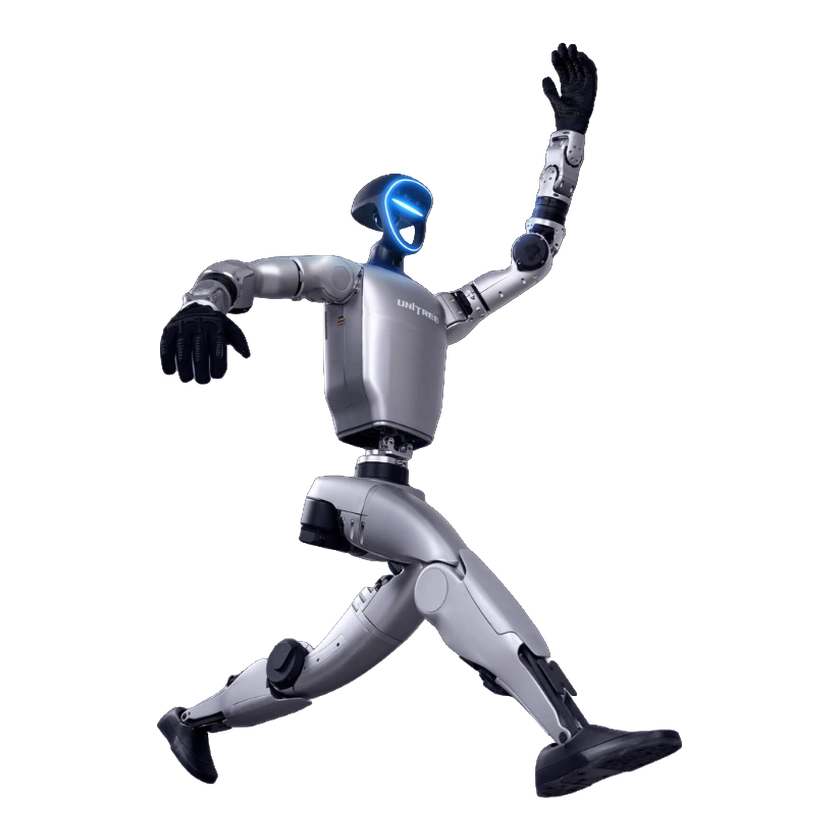
Humanoid Robots
Official Unitree G1 training guidance configures the Pi0.5 base policy on a G1 dataset. · Table II reports PGX end-to-end success (C0/C1) of 90%/60% for box transport, 75%/90% for mug placement and 60%/55% for coffee fetching. · The Oxford team fine-tuned the π₀.₅ stage policy on 44 real demonstrations (176 segments) at 30 Hz. Figure 7 reports grasp, place, re-grasp and delivery rates among runs that reach each stage.
Requires the documented Unitree LeRobot environment and G1 dataset/configuration.
Isaac Lab Arena with Unitree G1, Dex-3 hands and HOMIE whole-body control at 50 Hz. At least 20 episodes per cell. C0 uses the nominal start, while C1 varies each translation axis by ±0.30 m and yaw by ±30°. Time limits for box, mug and coffee are 40, 60 and 110 seconds.
The real policy was trained separately from the 50 Hz simulation policy. The comparison in Fig. 7 uses the nominal (C0) simulation condition.
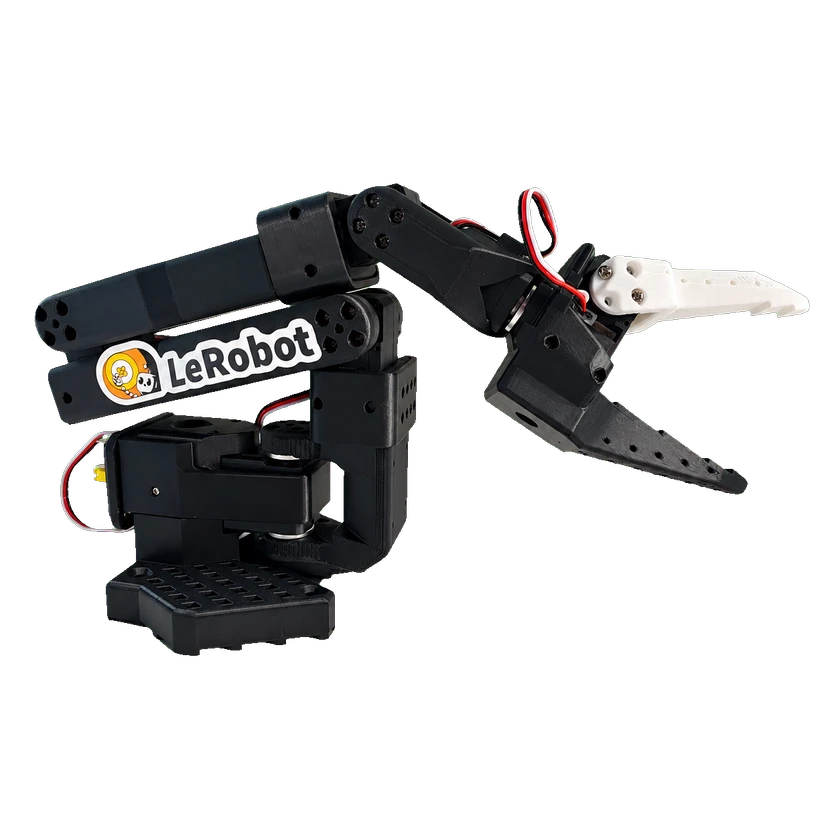
Robot Arms
SiMa.ai updated its Pi0.5 policy for placing a grey eraser in a white basket with an SO-101 follower. The new Modalix DevKit bundle increases the compiled graph count from 38 to 64 and uses Palette SDK and Model Compiler 3.0.0 with LLiMa 0.6.0.
The camera views must match training. Use PoLiMa and a Modalix DevKit with Palette SDK 3.0.0 and LLiMa 0.6.0.
No verified independent benchmark results are recorded for this version or the selected weights.
Publisher evaluation · Reported; not independently reproduced
LIBERO · LoopQ paper: LIBERO four-suite average ↗Success rate: 97.6 %
LoopQ paper Table 2, four suites
Authors’ openpi π₀.₅ result for the 2-bit policy across Spatial, Object, Goal and Long. Reported average from the authors’ Table 2.
Publisher evaluation · Reported; not independently reproduced
LIBERO-Plus · LoopQ paper: LIBERO-Plus 1,000 perturbations ↗Success rate: 74.9 %
LoopQ paper Tables 1–2, fixed 1000 instances
Authors’ openpi π₀.₅ result for the 2-bit policy on 1,000 fixed instances, split equally between camera and initial-state perturbations.
Load model.safetensors with openpi’s pi05_libero configuration and the included normalization statistics. The 9,058,009,496-byte PyTorch file stores 2-bit-quantized values decoded to BF16. Its tensor header lists both BF16 and F32 tensors.
The paper’s compact 1.58 GB configuration uses trellis-coded weights. With 8-bit activations and custom integer kernels, the paper reports 3.72 GB inference memory on Jetson AGX Thor. Its RTX 6000 Ada experiment reports 74.6 ms per action chunk and 58 successes out of 75 across three AgileX Piper tasks. In the paper’s RTX 6000 Ada test with floating-point activations and weights decoded at load, the same packed 2-bit configuration uses 6.16 GB of GPU memory and takes 82.1 ms per action chunk. The paper separately reports 80.0% on LIBERO and 49.8% on LIBERO-Plus for its 1-bit experiment. This download contains the 2-bit policy.