Nanyang Technological University researchers applied LoopQ to Physical Intelligence’s openpi π₀.₅ LIBERO policy. They quantized 414 linear layers across the backbone and action expert, using closed-loop calibration and readout-aligned fine-tuning. The authors report 97.6% success on LIBERO and 74.9% on LIBERO-Plus for the 2-bit policy.
Load model.safetensors with openpi’s pi05_libero configuration and the included normalization statistics. The 9,058,009,496-byte PyTorch file stores 2-bit-quantized values decoded to BF16. Its tensor header lists both BF16 and F32 tensors.
Der Trainingscode dieser Version ist unbestätigt. Öffentliche Code-Ressourcen belegen nicht die Verfügbarkeit der genauen Trainingsimplementierung. Prüfhinweise ansehen
The paper’s compact 1.58 GB configuration uses trellis-coded weights. With 8-bit activations and custom integer kernels, the paper reports 3.72 GB inference memory on Jetson AGX Thor. Its RTX 6000 Ada experiment reports 74.6 ms per action chunk and 58 successes out of 75 across three AgileX Piper tasks. In the paper’s RTX 6000 Ada test with floating-point activations and weights decoded at load, the same packed 2-bit configuration uses 6.16 GB of GPU memory and takes 82.1 ms per action chunk. The paper separately reports 80.0% on LIBERO and 49.8% on LIBERO-Plus for its 1-bit experiment. This download contains the 2-bit policy. Verfügbare Gewichte oder Code belegen keine sofortige Roboterkompatibilität. Prüfen Sie Konfiguration, Daten und Schnittstellen in der Quelldokumentation.
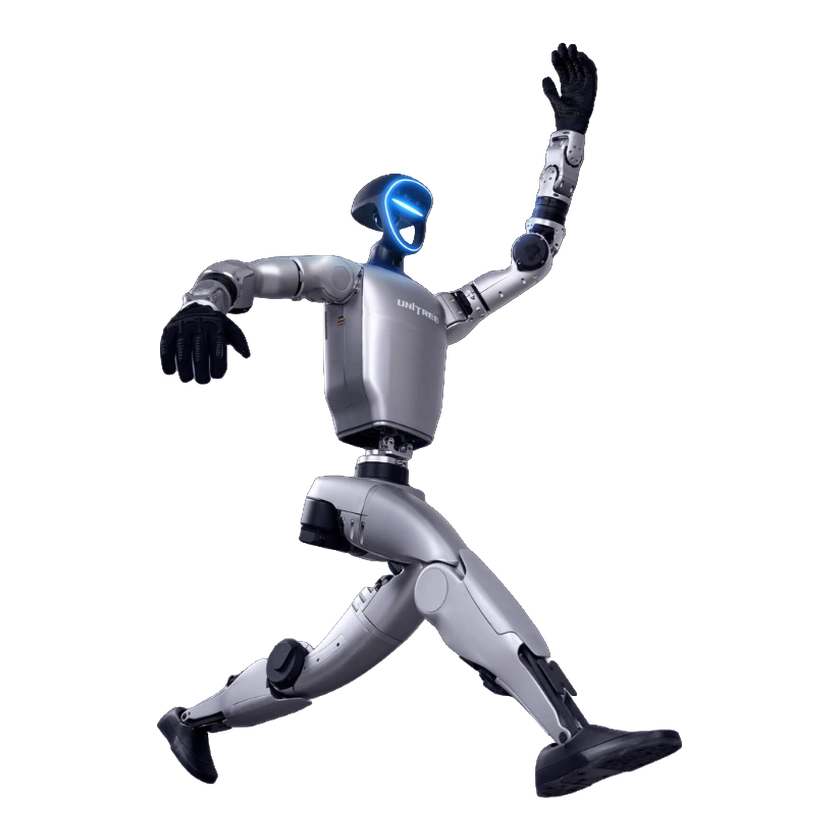
Die offizielle Unitree-G1-Trainingsanleitung konfiguriert die Pi0.5-Basispolicy. · Tabelle II nennt für PGX Gesamterfolgsraten (C0/C1) von 90 %/60 % beim Kistentransport, 75 %/90 % beim Platzieren der Tasse und 60 %/55 % beim Kaffeeholen. · Das Oxford-Team stimmte π₀.₅ mit 44 realen Demonstrationen (176 Segmente) bei 30 Hz fein ab. Abbildung 7 zeigt Greif-, Platzier-, Wiederaufnahme- und Übergaberaten bezogen auf die Läufe, die die jeweilige Phase erreichten.
Erfordert die dokumentierte Unitree-LeRobot-Umgebung sowie G1-Datensatz und -Konfiguration.
Isaac Lab Arena mit Unitree G1, Dex-3-Händen und HOMIE-Ganzkörperregelung. Training und Ausführung bei 50 Hz. Mindestens 20 Durchläufe pro Bedingung. C0 nutzt die nominelle Startpose, C1 variiert beide Translationsachsen um ±0,30 m und den Gierwinkel um ±30°. Zeitlimits für Kistentransport, Tassenplatzierung und Kaffeeholen: 40, 60 und 110 Sekunden.
Die Strategie für den realen Roboter wurde getrennt von der 50-Hz-Simulationsstrategie trainiert. Abbildung 7 vergleicht mit der nominellen Simulationsbedingung C0.
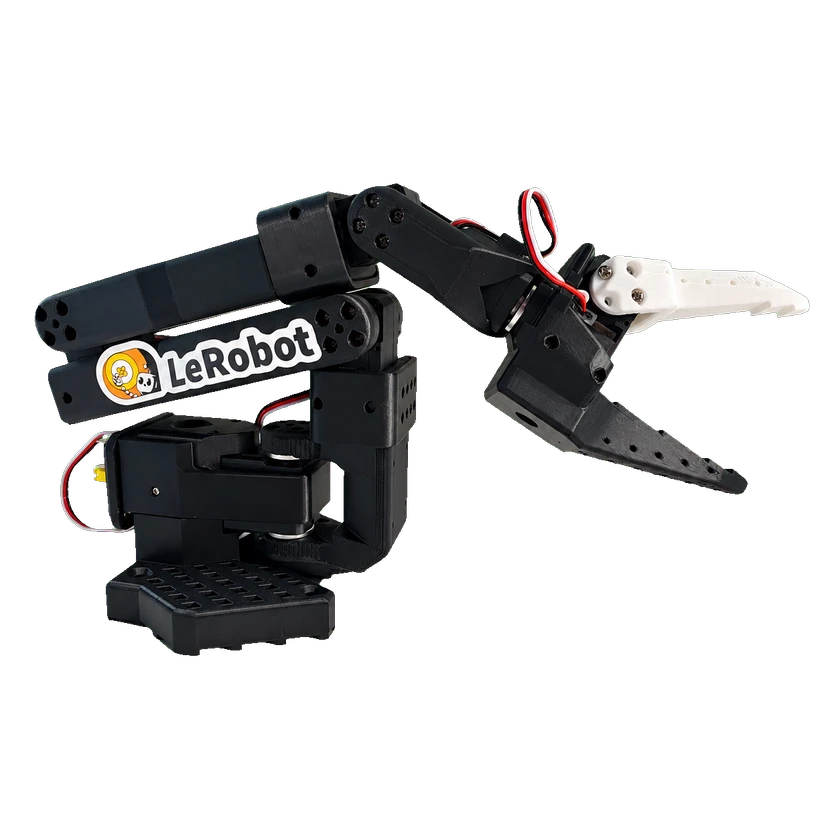
SiMa.ai hat sein Pi0.5-Paket aktualisiert, mit dem ein SO-101-Followerarm einen grauen Radiergummi in einen weißen Korb legt. Die neue Fassung für das Modalix DevKit verwendet Palette SDK und Model Compiler 3.0.0 sowie LLiMa 0.6.0. Die Zahl der kompilierten Graphen steigt von 38 auf 64.
Die Kameraperspektiven müssen dem Training entsprechen. Erforderlich sind PoLiMa und ein Modalix DevKit mit Palette SDK 3.0.0 und LLiMa 0.6.0.
Evaluationsergebnisse
Keine verifizierten unabhängigen Evaluationen für diese Version oder die ausgewählten Gewichte erfasst.
Evaluation des Herausgebers · Berichtet; nicht unabhängig reproduziert
Load model.safetensors with openpi’s pi05_libero configuration and the included normalization statistics. The 9,058,009,496-byte PyTorch file stores 2-bit-quantized values decoded to BF16. Its tensor header lists both BF16 and F32 tensors.
The paper’s compact 1.58 GB configuration uses trellis-coded weights. With 8-bit activations and custom integer kernels, the paper reports 3.72 GB inference memory on Jetson AGX Thor. Its RTX 6000 Ada experiment reports 74.6 ms per action chunk and 58 successes out of 75 across three AgileX Piper tasks. In the paper’s RTX 6000 Ada test with floating-point activations and weights decoded at load, the same packed 2-bit configuration uses 6.16 GB of GPU memory and takes 82.1 ms per action chunk. The paper separately reports 80.0% on LIBERO and 49.8% on LIBERO-Plus for its 1-bit experiment. This download contains the 2-bit policy.