
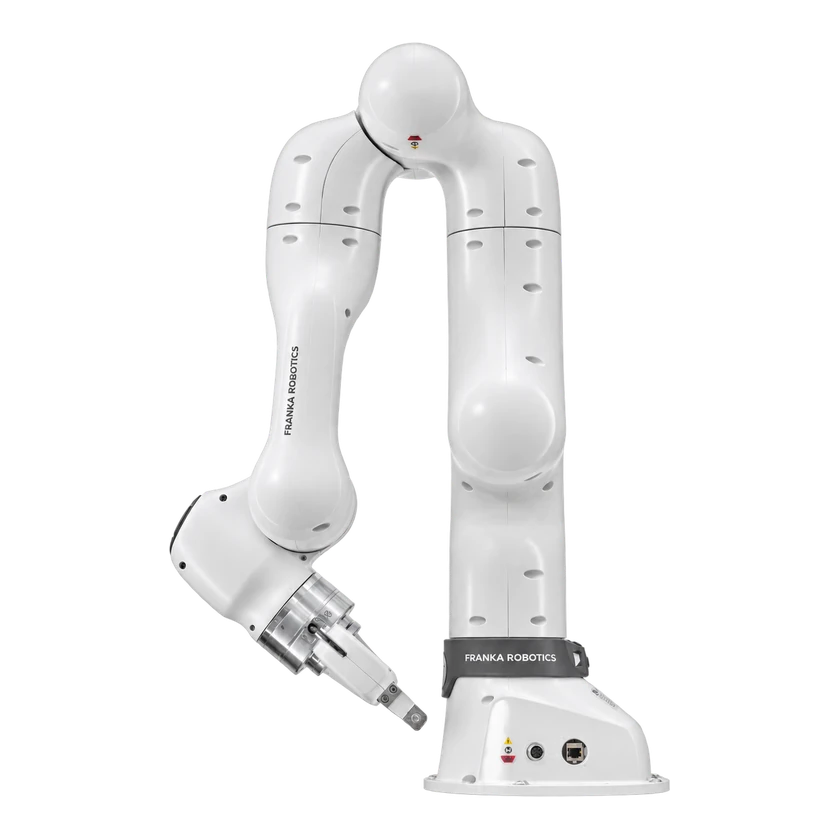
Robot Arms
Franka Research 3
π₀.₅ ForceBench Prompt Fusion ↗Real-robot experiment
The authors report a separate real-robot evaluation on Franka Research 3.
DecentVLA fully fine-tuned π₀.₅ Base on pooled data from eight DROID 1.0.1 site-by-collector cells. This centralised control uses 8,723 training episodes and a global batch of 256. It releases rounds 60 and 100 as bfloat16 EMA checkpoints for JAX/openpi.
View full model descriptionPaper / report unconfirmed
Official introductory materials are recorded; no version-specific paper or technical report has been verified.
Last checked: 2026-11-23
Source publication date: 2026-11-23
Training code for this version is unconfirmed. Public code resources do not establish access to the exact training implementation. View verification notes
Some training datasets are public; this does not establish access to the complete training mixture.
| File | Access | Weights license | Commercial use |
|---|---|---|---|
| Round 100 · bfloat16 EMA | Access | Weights license | Commercial use |
| Round 60 · bfloat16 EMA | Access | Weights license | Commercial use |
SourceVerified on · 2026-11-23
The publisher documents a serving check for both checkpoints. The public release contains no physical-robot result for these weights and gives no RoboLab-120 score. Available weights or code do not establish plug-and-play robot compatibility. Check the required configuration, data and interfaces in the source documentation.
trajectory · continuous
horizon 16
Third-party fine-tune
Actions
Supervised fine-tuning
Fine-tuned from: π₀ · π₀.₅ ↗
Family and other-version demonstrations are context, not independently verified results for the selected weights.
Robot Arms
The authors report a separate real-robot evaluation on Franka Research 3.
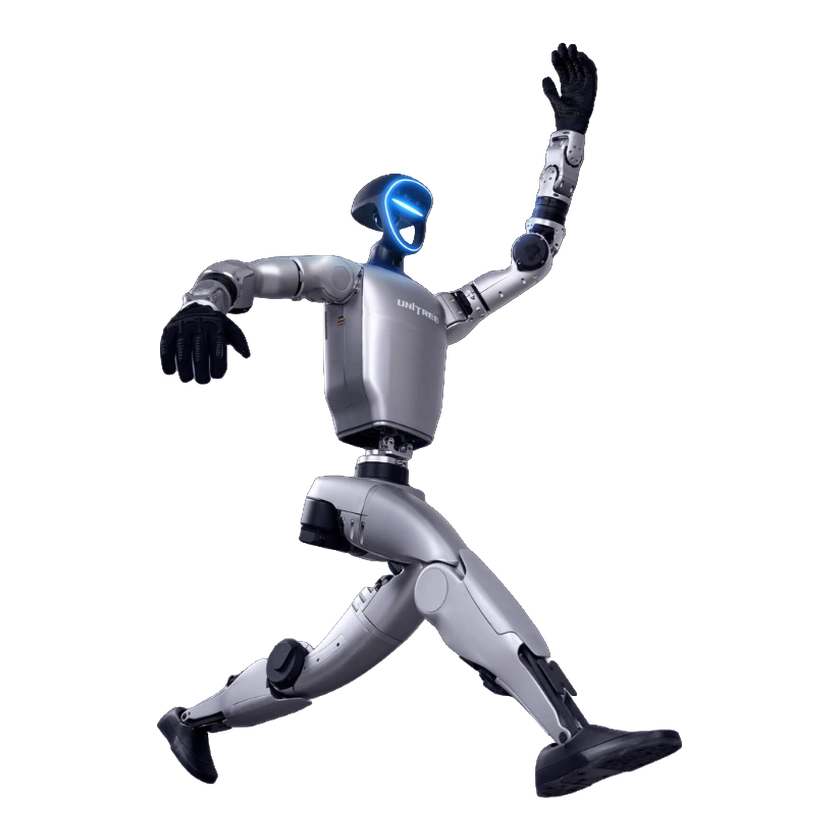
Humanoid Robots
Official Unitree G1 training guidance configures the Pi0.5 base policy on a G1 dataset. · Table II reports PGX end-to-end success (C0/C1) of 90%/60% for box transport, 75%/90% for mug placement and 60%/55% for coffee fetching. · The Oxford team fine-tuned the π₀.₅ stage policy on 44 real demonstrations (176 segments) at 30 Hz. Figure 7 reports grasp, place, re-grasp and delivery rates among runs that reach each stage.
Requires the documented Unitree LeRobot environment and G1 dataset/configuration.
Isaac Lab Arena with Unitree G1, Dex-3 hands and HOMIE whole-body control at 50 Hz. At least 20 episodes per cell. C0 uses the nominal start, while C1 varies each translation axis by ±0.30 m and yaw by ±30°. Time limits for box, mug and coffee are 40, 60 and 110 seconds.
The real policy was trained separately from the 50 Hz simulation policy. The comparison in Fig. 7 uses the nominal (C0) simulation condition.
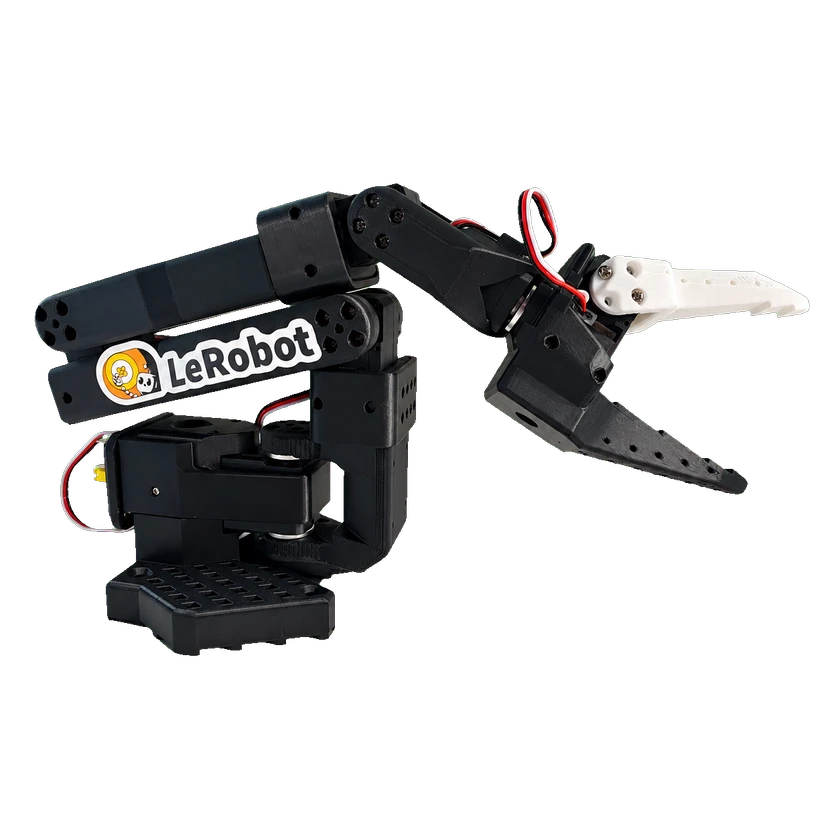
Robot Arms
SiMa.ai updated its Pi0.5 policy for placing a grey eraser in a white basket with an SO-101 follower. The new Modalix DevKit bundle increases the compiled graph count from 38 to 64 and uses Palette SDK and Model Compiler 3.0.0 with LLiMa 0.6.0.
The camera views must match training. Use PoLiMa and a Modalix DevKit with Palette SDK 3.0.0 and LLiMa 0.6.0.
The split groups successful place/take/stack demonstrations by building label × collector, caps each site at 1,500 episodes and holds out 10% per site. Openpi’s idle filter leaves 1,724,640 training frames. Training ran for 100 rounds × 250 steps (25,000 updates; 6.4M samples) with AdamW, learning rate 5×10⁻⁵ after 1,000 warmup steps, gradient clipping at 1.0, and EMA decay 0.99. The policy uses a 16-step training horizon. The model card reports a separate serving check with a 15×8 action array. Published files cover the openpi exports and their DROID normalisation statistics.