SWAN

Methode / Werkzeug

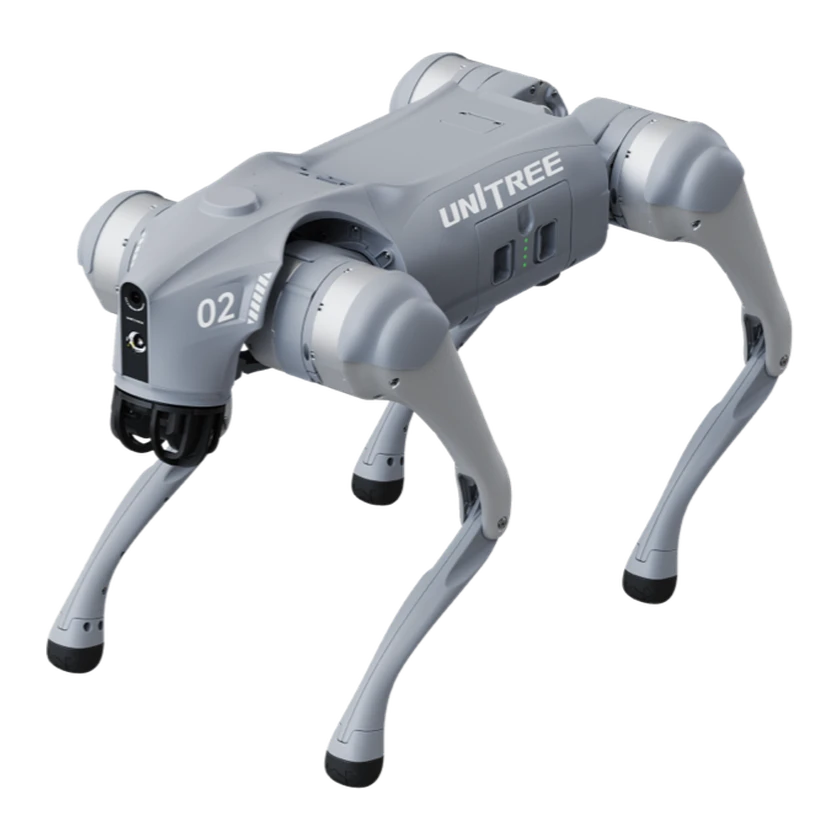
SWAN is a model-based reinforcement learning planner. It combines multimodal k-MPPI, a mixture-of-factor-analyzers policy over action chunks, and advantage-guided proposal optimization. The paper evaluates 31 continuous-control tasks and demonstrates zero-shot velocity tracking on a physical Unitree Go2.

Vollständige Modellbeschreibung ansehen

Publikationen (1)

Fast World Planner: Advantage-Aware Action-Chunk Policy for Online Planning

Fachartikel verfügbar

arXiv: 2611.28616
Autoren und Einrichtungen (9)

Autorenreihenfolge: Originalreihenfolge

  1. Jiangtao Kong

    William & Mary

  2. Yuchen Wang

    William & Mary

  3. Yandong Luo

    Georgia Institute of Technology

  4. Rongchao Xu

    Florida State University

  5. Guang Wang

    Florida State University

  6. Yanbing Mao

    Wayne State University

  7. Lu Gan

    Georgia Institute of Technology

  8. Tianyi Zhou

    Mohamed bin Zayed University of Artificial Intelligence

  9. Huajie Shao

    William & Mary

Erstveröffentlichung
2026-11
Neueste Revision
v1
Konferenz / Zeitschrift
Nicht angegeben

Abgedeckte Modellversionen

Zugang und Nutzung

Der Trainingscode dieser Version ist unbestätigt. Öffentliche Code-Ressourcen belegen nicht die Verfügbarkeit der genauen Trainingsimplementierung. Prüfhinweise ansehen

Trainings- / Fine-Tuning-Code

Vor der Bereitstellung prüfen

The reported method uses state observations and policies trained separately for each task. Verfügbare Gewichte oder Code belegen keine sofortige Roboterkompatibilität. Prüfen Sie Konfiguration, Daten und Schnittstellen in der Quelldokumentation.

Steuerung und Ein-/Ausgaben

Modelltyp
Bewegungs- und Ganzkörpersteuerung
Eingabe
Roboterzustand

Einsatzbereich und Training

Ausgabe

Aktionen

Roboterform

Vierbeiner

Aufgabenumfang

Einzelne Aufgabe

Training

Bestärkendes Lernen

Verwandte Roboter

Alle Parameter und Prüfhinweise (Modellkarte)

The authors evaluated 31 tasks from DMControl, HumanoidBench, and MyoSuite, using half as many MPPI refinement iterations as the planning baselines in the main comparison. In the separate Go2 hardware experiment, one NVIDIA GeForce RTX 5090 ran the controller at an average of 308.16 Hz with three MPPI refinements per control step. Motion capture was used to measure tracking in figure-eight and straight-line segments. G1 results in this work are from simulation.

Cover: Jiangtao Kong et al., Figure 2, CC BY 4.0. Converted to WebP.

Quelle oder Korrektur einreichen