
Fast World Planner: Advantage-Aware Action-Chunk Policy for Online Planning
Paper available
arXiv: 2611.28616
Authors & affiliations (9)
Author order: Original order
- First published
- 2026-11
- Latest paper revision
- v1
- Venue
- Not provided
SWAN is a model-based reinforcement learning planner. It combines multimodal k-MPPI, a mixture-of-factor-analyzers policy over action chunks, and advantage-guided proposal optimization. The paper evaluates 31 continuous-control tasks and demonstrates zero-shot velocity tracking on a physical Unitree Go2.
View full model descriptionPaper available
Author order: Original order
Training code for this version is unconfirmed. Public code resources do not establish access to the exact training implementation. View verification notes
The reported method uses state observations and policies trained separately for each task. Available weights or code do not establish plug-and-play robot compatibility. Check the required configuration, data and interfaces in the source documentation.
Actions
Quadruped
Single task
Reinforcement learning
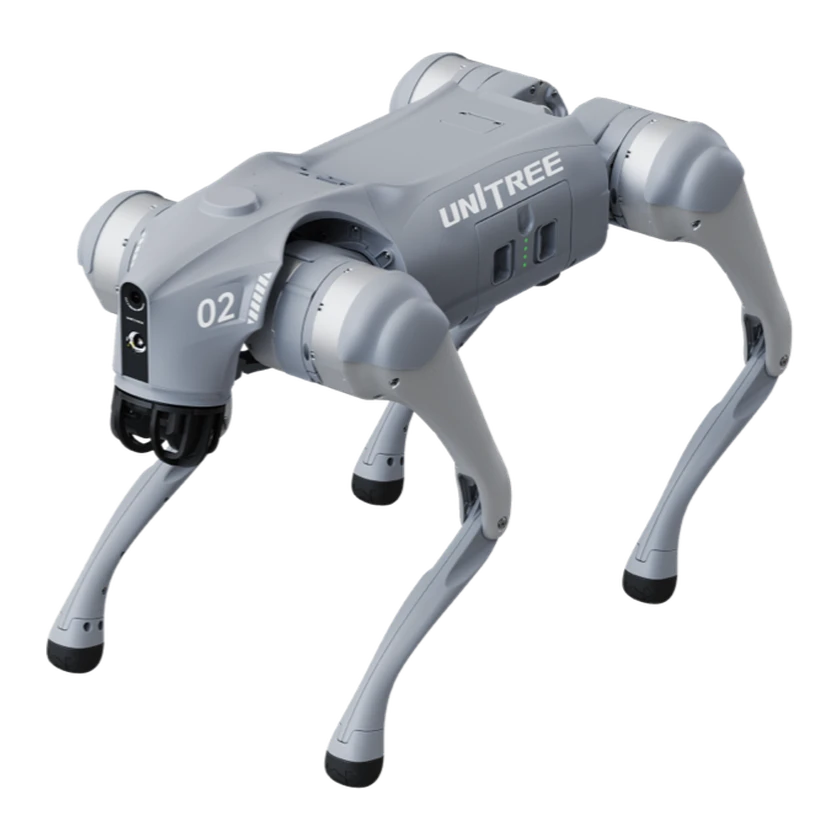
Quadruped Robots
The authors demonstrate zero-shot velocity tracking on a physical Unitree Go2.
One GeForce RTX 5090, three MPPI refinements per control step and 308.16 Hz average control frequency.
The authors evaluated 31 tasks from DMControl, HumanoidBench, and MyoSuite, using half as many MPPI refinement iterations as the planning baselines in the main comparison. In the separate Go2 hardware experiment, one NVIDIA GeForce RTX 5090 ran the controller at an average of 308.16 Hz with three MPPI refinements per control step. Motion capture was used to measure tracking in figure-eight and straight-line segments. G1 results in this work are from simulation.
Cover: Jiangtao Kong et al., Figure 2, CC BY 4.0. Converted to WebP.