

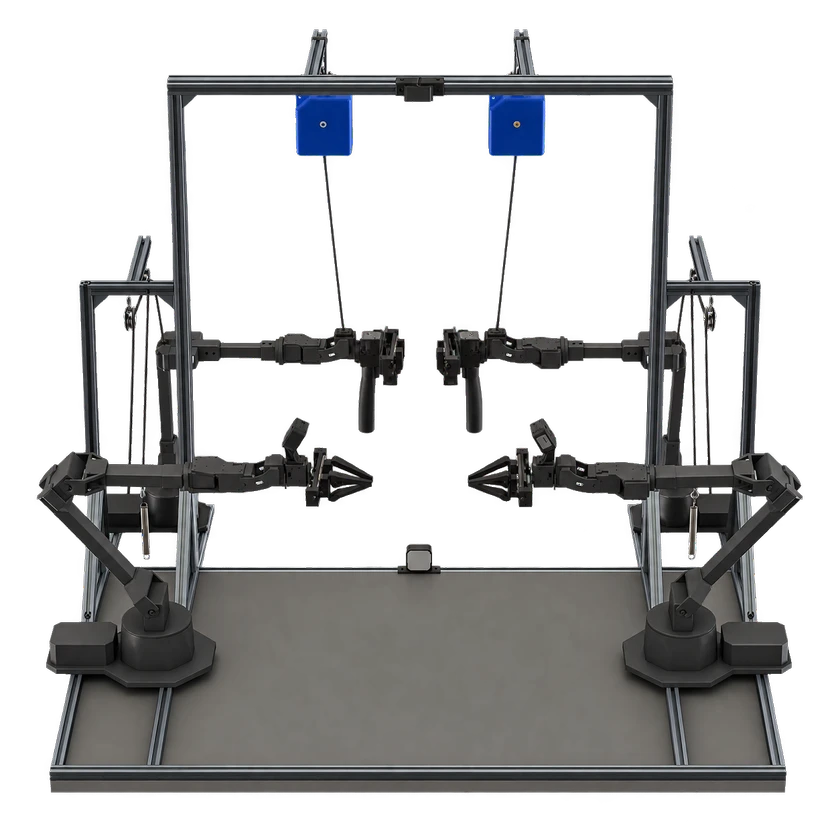
Robot Arms
Version scope and roles for these associations await verification.
Choose a version to compare
VLA models optimized to run locally on robotic devices.
Robot models: 2 · Version relationships: 2
Experiments do not imply factory configuration. Evidence applies only to the named model version.
Robot Arms
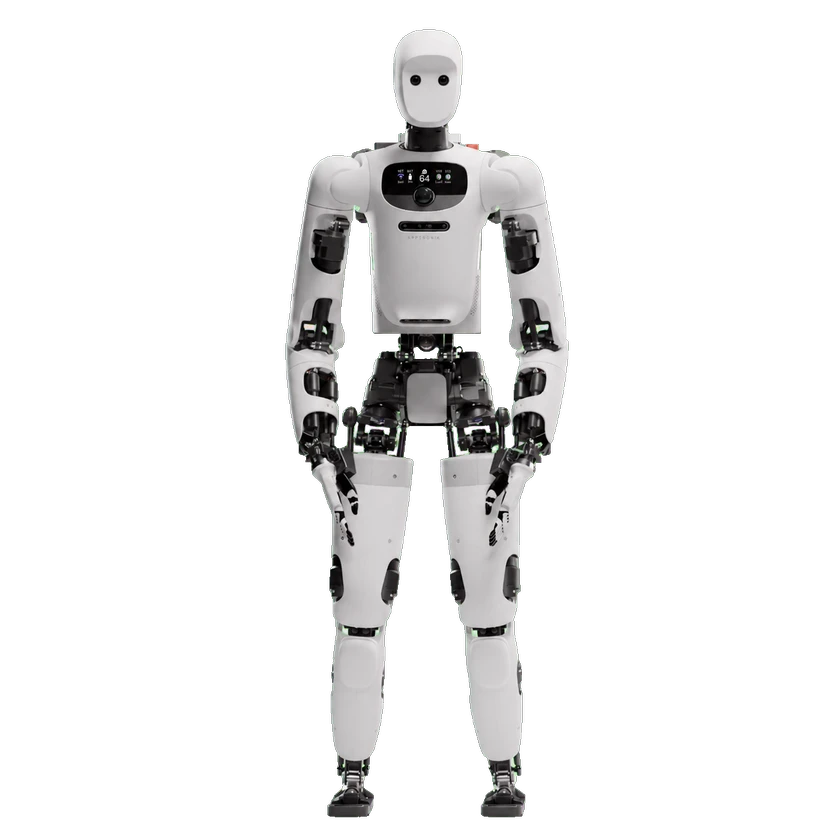
Humanoid Robots
we were able to further adapt it to a bi-arm Franka FR3 robot and the Apollo humanoid robot by Apptronik.
On-Device 2 uses on-device Gemma and Gemini Robotics 1.5 technology; Google reports new-embodiment adaptation in a few hours, typically with fewer than 200 examples. Distribution remains limited to Trusted Testers.
Previously reported
On-Device 1 already supported local manipulation, task fine-tuning and demonstrated adaptation from ALOHA to other robots.
This announcement
On-Device 2 uses on-device Gemma and Gemini Robotics 1.5 technology; Google reports new-embodiment adaptation in a few hours, typically with fewer than 200 examples. Distribution remains limited to Trusted Testers.
Version 1 task-adaptation demonstration counts and version 2 new-embodiment examples are different experimental scopes, not a like-for-like sample-efficiency comparison. This is not a public weight/API opening; standing bi-arm evaluations do not establish mobile whole-body control.
The model runs directly on the robot without a data-network dependency, with task adaptation and SDK access for selected Trusted Testers.
Previously reported
The earlier Gemini Robotics offering was the flagship VLA; this announcement introduces a separately optimized local model.
This announcement
The model runs directly on the robot without a data-network dependency, with task adaptation and SDK access for selected Trusted Testers.
Local inference changes latency/connectivity deployment options, but is not public weight, code or API release. The 50–100 demonstrations concern task adaptation; no exact success rate is inferred from approximate charts.
No published papers recorded.
Publisher not provided · Type unconfirmed
Publication date unknown · Accessed: 2026-10-27
Google DeepMind · Documentation
Publication date unknown · Accessed: 2026-11-09
Publisher not provided · Type unconfirmed
Publication date unknown · Accessed: 2026-10-27
Google DeepMind · Documentation
Publication date unknown · Accessed: 2026-11-09