Body Schema Policy: Body as the Vision–Action Interface for Efficient Robot Loco-Manipulation
Paper available
Authors & affiliations (5)
Author order: Original order
- First published
- 2026-11-17
- Latest paper revision
- v1 · 2026-11-17
- Venue
- Not provided
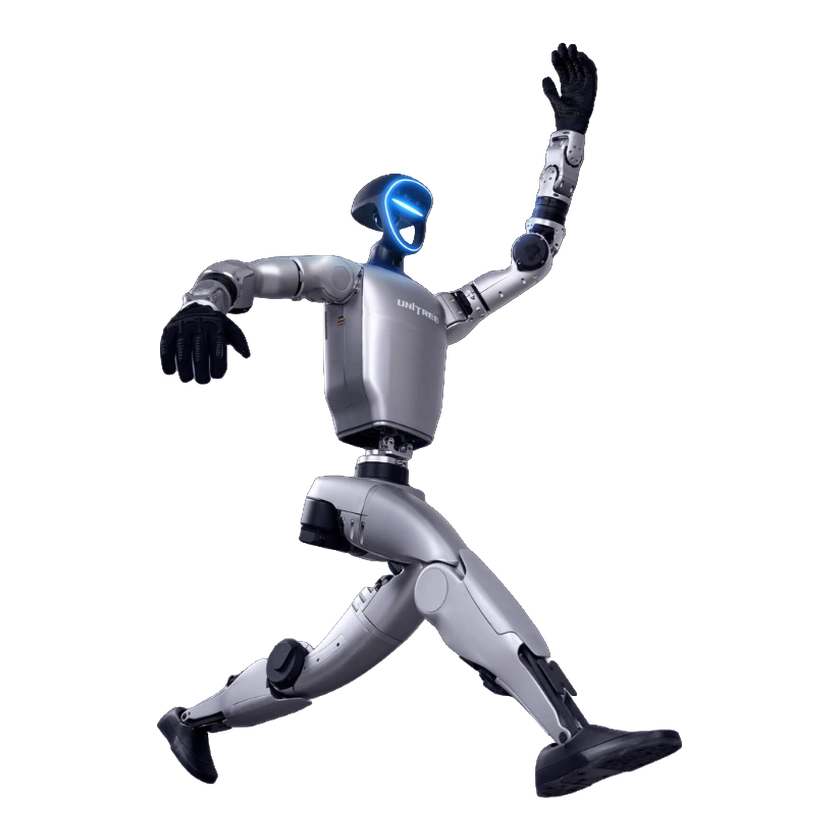
Body Schema Policy (BSP) is a visuomotor imitation-learning policy for whole-body locomotion and manipulation. Joint and link tokens follow the robot’s kinematic tree and query image features to denoise action chunks. The authors evaluated BSP on Unitree G1 in simulation and on hardware and on a simulated Fetch mobile manipulator.
View full model descriptionPaper available
Author order: Original order
Training code for this version is unconfirmed. Public code resources do not establish access to the exact training implementation. View verification notes
SourceVerified on · 2026-11-22
Training uses task-specific demonstrations. The project page lists the code as forthcoming. Public weights, the access route and the software and weights licenses remain unconfirmed. Available weights or code do not establish plug-and-play robot compatibility. Check the required configuration, data and interfaces in the source documentation.
Actions
Denoised action chunks
Humanoid / Mobile manipulator
Multiple tasks
Imitation learning
No verified independent benchmark results are recorded for this version or the selected weights.
Publisher evaluation · Reported; not independently reproduced
Body Schema Policy paper evaluations · SIMPLE · Unitree G1 simulation ↗Successful episodes out of 270: 221 count
Table 1. 35.0M parameters. Nine tasks, 30 episodes per task (10 at each of three levels).
Publisher evaluation · Reported; not independently reproduced
Body Schema Policy paper evaluations · SIMPLE · Unitree G1 simulation ↗Latency per action chunk: 13.9 ms
RTX 6000 Ada
16-step action chunk
Table 1. 35.0M parameters. Nine tasks, 30 episodes per task (10 at each of three levels).
Publisher evaluation · Reported; not independently reproduced
Body Schema Policy paper evaluations · Unitree G1 · physical robot ↗Push trolley successes out of 10: 8 count
Table 3. 48.3M parameters. Ten physical trials per task and 15 demonstrations used per task for training.
Publisher evaluation · Reported; not independently reproduced
Body Schema Policy paper evaluations · Unitree G1 · physical robot ↗Pedal bin successes out of 10: 8 count
Table 3. 48.3M parameters. Ten physical trials per task and 15 demonstrations used per task for training.
Publisher evaluation · Reported; not independently reproduced
Body Schema Policy paper evaluations · Unitree G1 · physical robot ↗Latency per action chunk: 17.4 ms
RTX 5090
Table 3. 48.3M parameters. Ten physical trials per task and 15 demonstrations used per task for training.
Publisher evaluation · Reported; not independently reproduced
Body Schema Policy paper evaluations · ManiSkill-HAB SetTable · Fetch simulation ↗Open fridge success rate: 34.4 %
Table 2. 47.4M parameters. Mean over three training seeds; SD 3.6 percentage points. 1,008 evaluation episodes per seed for this subtask.
Publisher evaluation · Reported; not independently reproduced
Body Schema Policy paper evaluations · ManiSkill-HAB SetTable · Fetch simulation ↗Close fridge success rate: 20.6 %
Table 2. 47.4M parameters. Mean over three training seeds; SD 1.6 percentage points. 1,008 evaluation episodes per seed for this subtask.
Publisher evaluation · Reported; not independently reproduced
Body Schema Policy paper evaluations · ManiSkill-HAB SetTable · Fetch simulation ↗Place object success rate: 16.5 %
Table 2. 47.4M parameters. Mean over three training seeds; SD 1.6 percentage points. 1,008 evaluation episodes per seed for this subtask.
Unitree G1 · SIMPLE simulation (35.0M) 221/270 across nine tasks. 13.9 ms per 16-step chunk on RTX 6000 Ada.
Unitree G1 · physical robot (48.3M) 8/10 pushing a trolley and 8/10 using a pedal bin. 17.4 ms per chunk on RTX 5090.
Fetch · ManiSkill-HAB simulation (47.4M) SetTable: open fridge 34.4 ± 3.6%, close fridge 20.6 ± 1.6%, place 16.5 ± 1.6%. Mean ± SD over three seeds, 1,008 episodes per seed and subtask. The Fetch setup uses head and hand RGB cameras, joint state, and a language instruction.
The real G1 used a head-mounted RealSense D435i, two Dex3-1 hands and HoloMotion v1.4 to command 43 joints. Parameter counts are totals for each evaluated configuration.